

















Test across every technology, in one unbroken flow
The Sahi Pro Advantage: Sahi Pro vs. Katalon
Sahi Pro leads with a proprietary architecture, verified enterprise outcomes, and a single-flow design built for teams that have outgrown Selenium-based tools.
Dimension
License
Commercial license
Open-source, free
Code requirement
No-code; scripting available when needed
Full code
Platform coverage
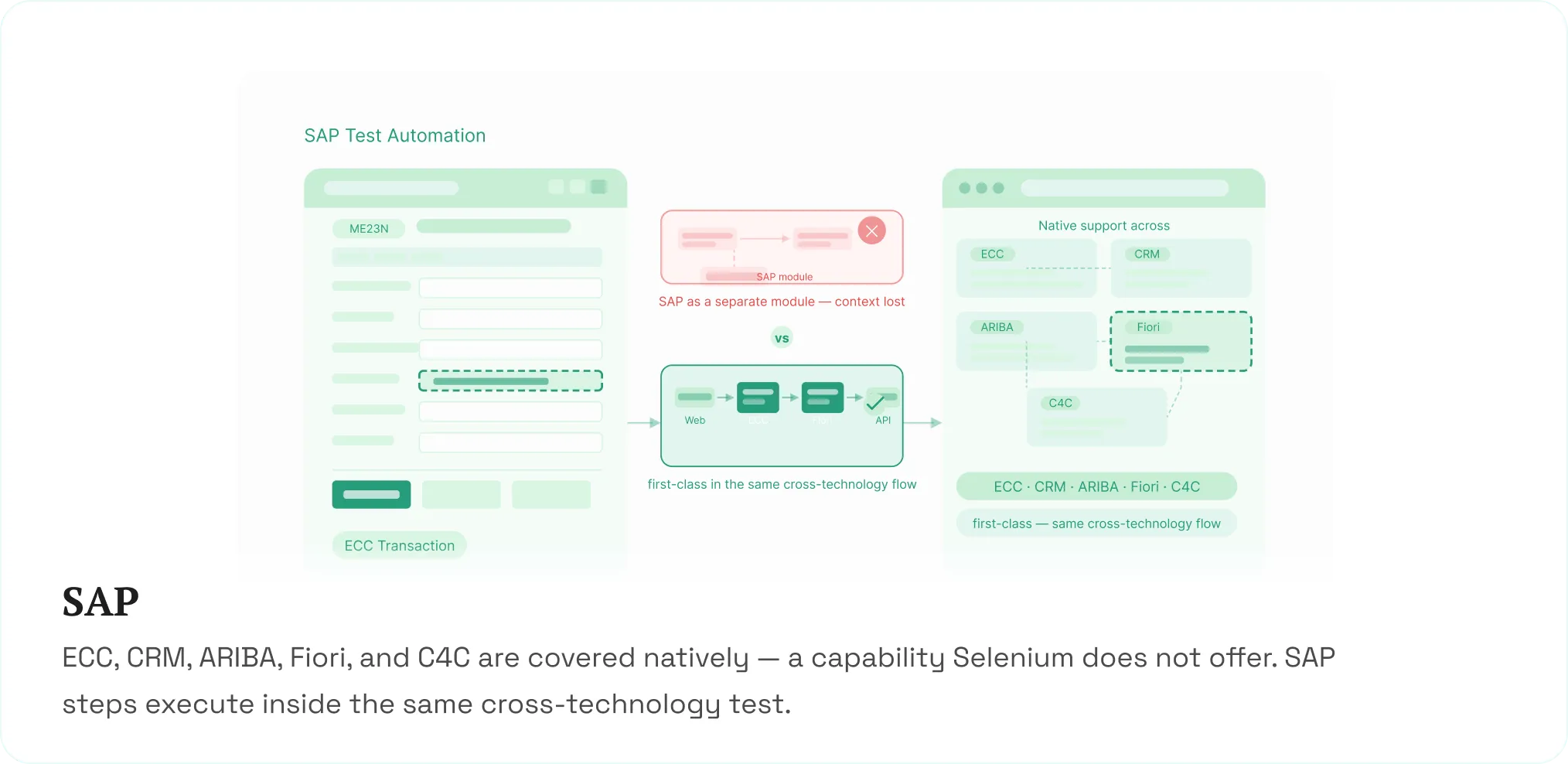
Web, Desktop, Mobile, API, SAP, Database
Web browsers only
Cross-platform single flow
Yes - one test, all platforms, shared data
Not applicable (web only)
Test stability
Relational APIs + auto-healing
Brittle locators (XPath/CSS), no self-healing
Maintenance burden
Low - 80% reduction vs. Selenium
High - external dependencies, browser driver updates
AI capabilities
GenAIna , AI Assist, Auto-healing
None native
Who authors tests
Manual testers, QA leads, developers
Developers or trained SDET engineers
Onboarding time
2 weeks, no certifications required
6–8 weeks to proficiency
Deployment
On-premise or cloud
Self-hosted
Parallel execution
Built-in, managed
Selenium Grid (requires setup and maintenance)
Reporting
Built-in with screenshots, logs, and analytics
Third-party tools required
Community
1,000 enterprises, 400 via word-of-mouth
Millions globally, industry standard
Why Teams Chose Sahi Pro
From customers who evaluated both products
These are the reasons customers gave when they evaluated both products and made their decision.
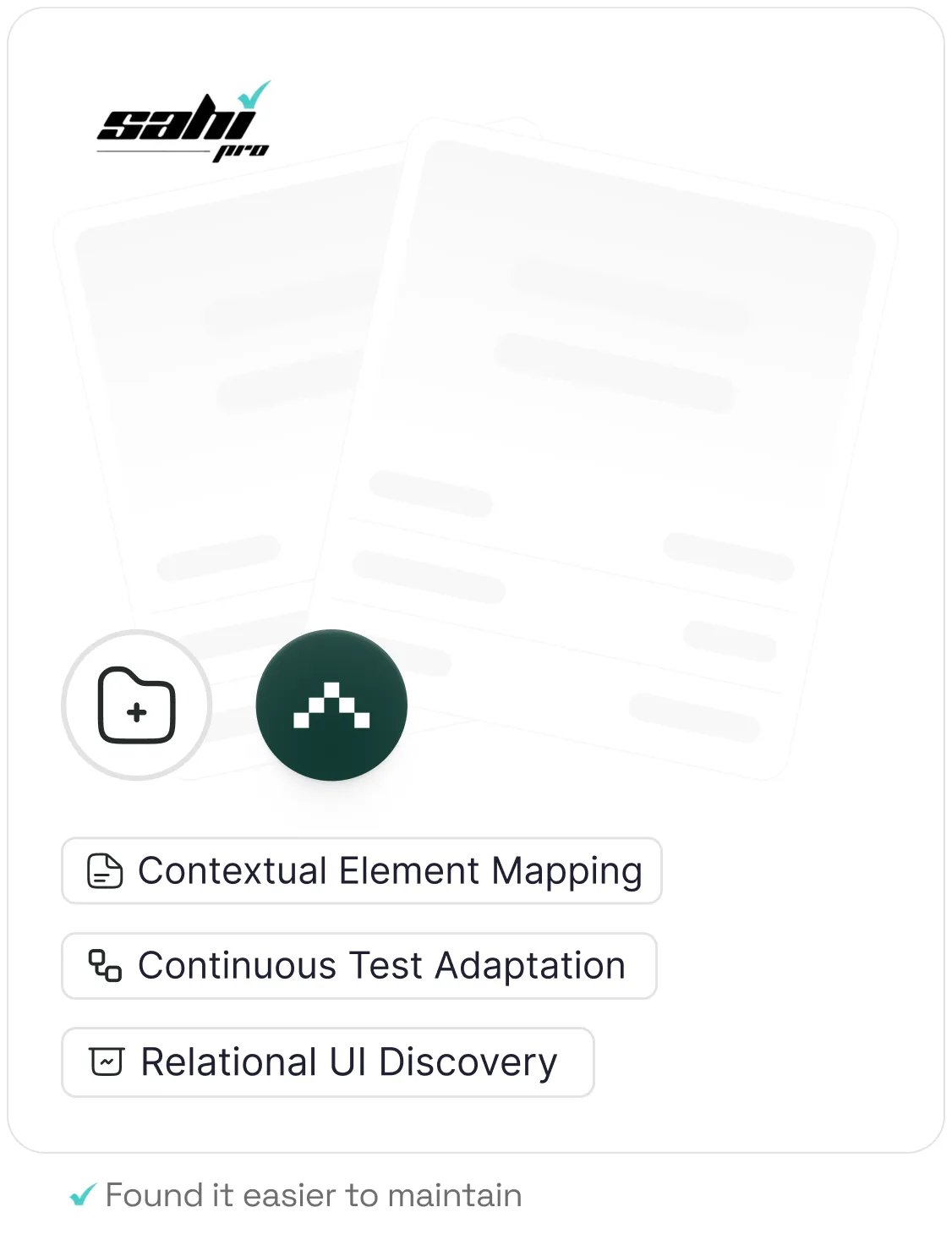
Found it easier to maintain
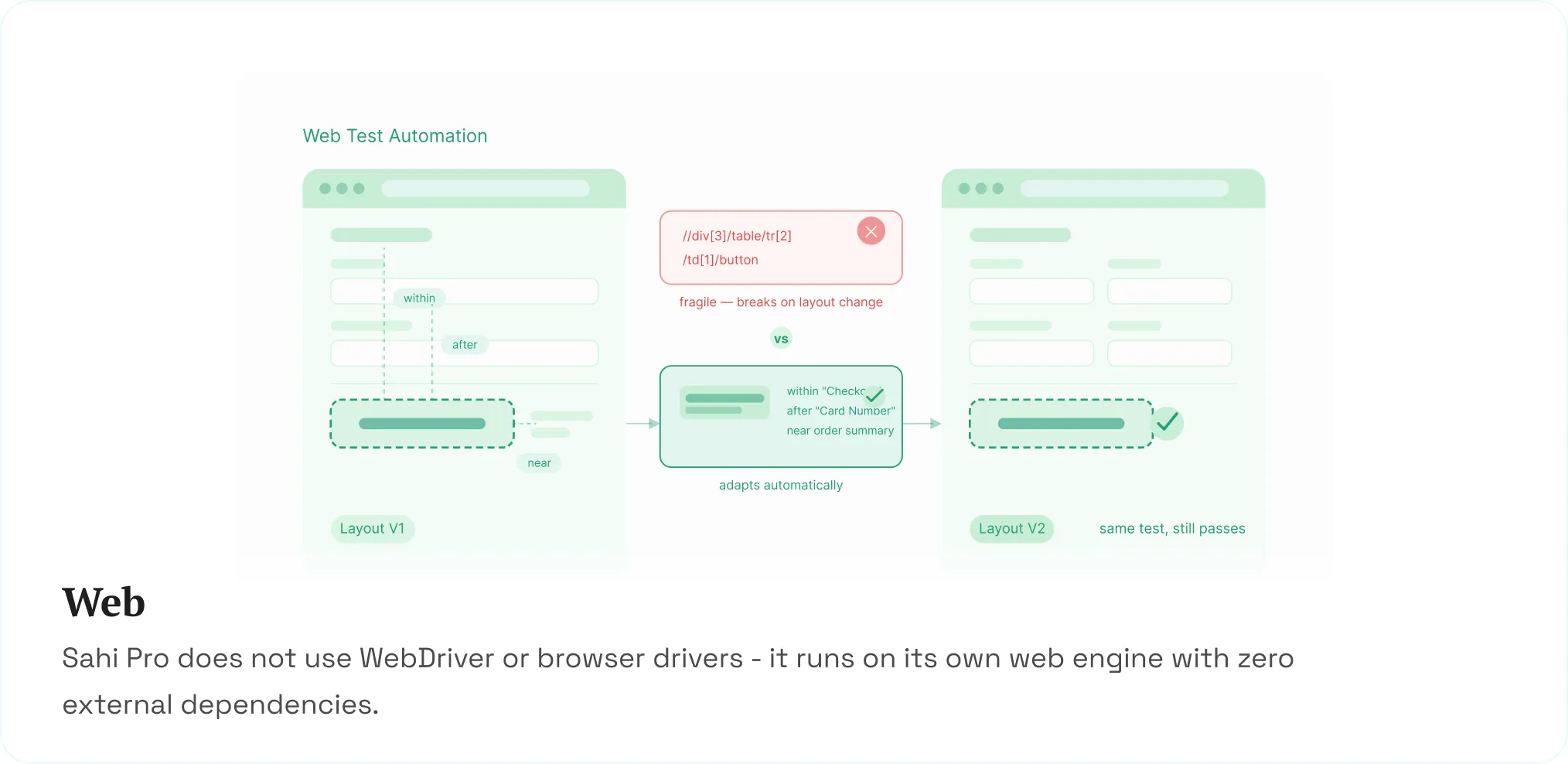
Selenium’s XPath and CSS locators break when the UI changes; Sahi Pro’s relational APIs keep tests stable without manual rework after every release.
More affordable with better ROI
Selenium carries no licence fee, but engineering hours spent fixing broken tests make the real TCO higher than most teams account for at the start.
Better programmatic control where needed
Selenium offers full code control for developers; Sahi Pro preserves that access while adding a no-code layer so the entire QA team can contribute.
Single-flow architecture provable in a POC
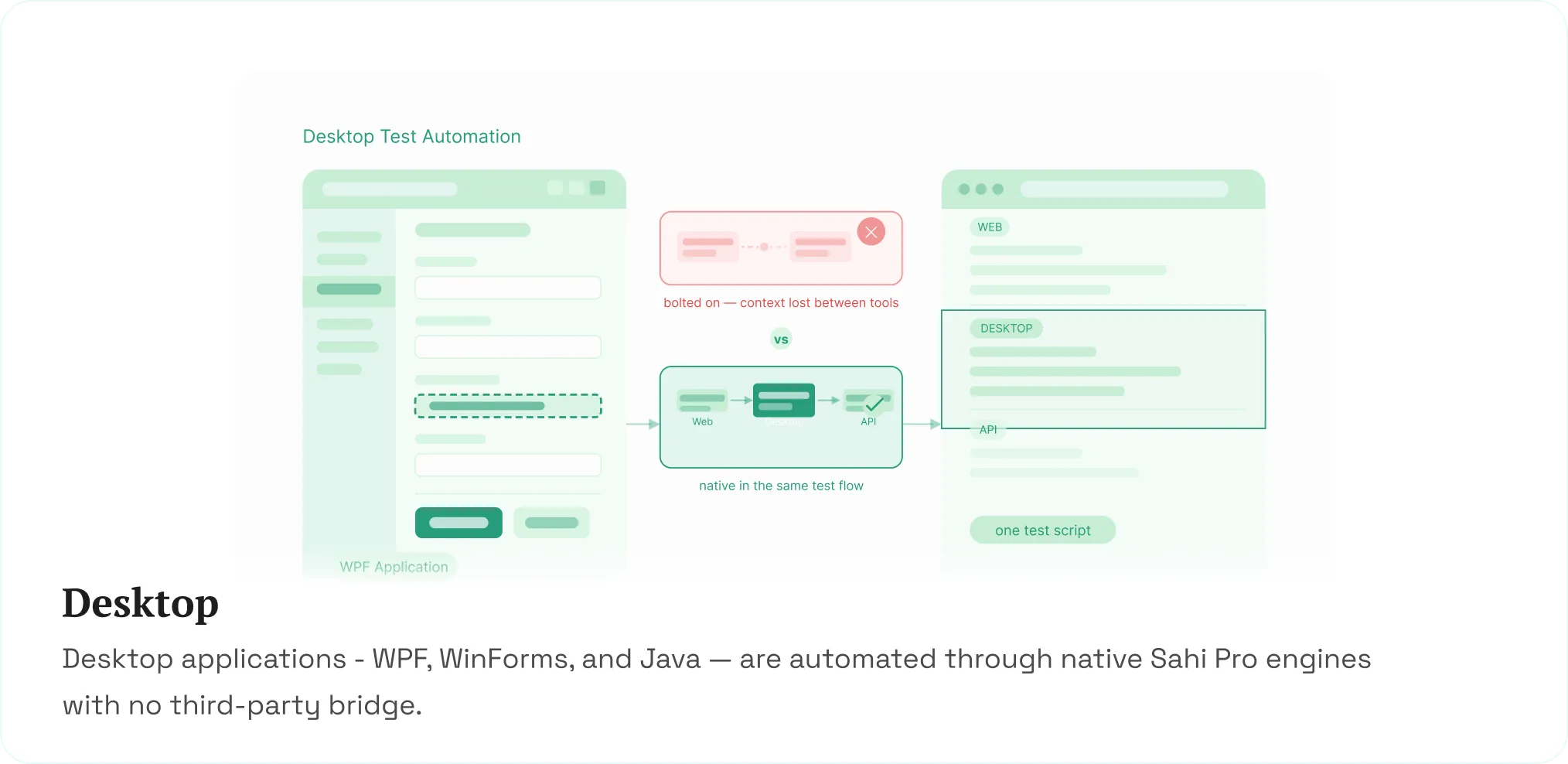
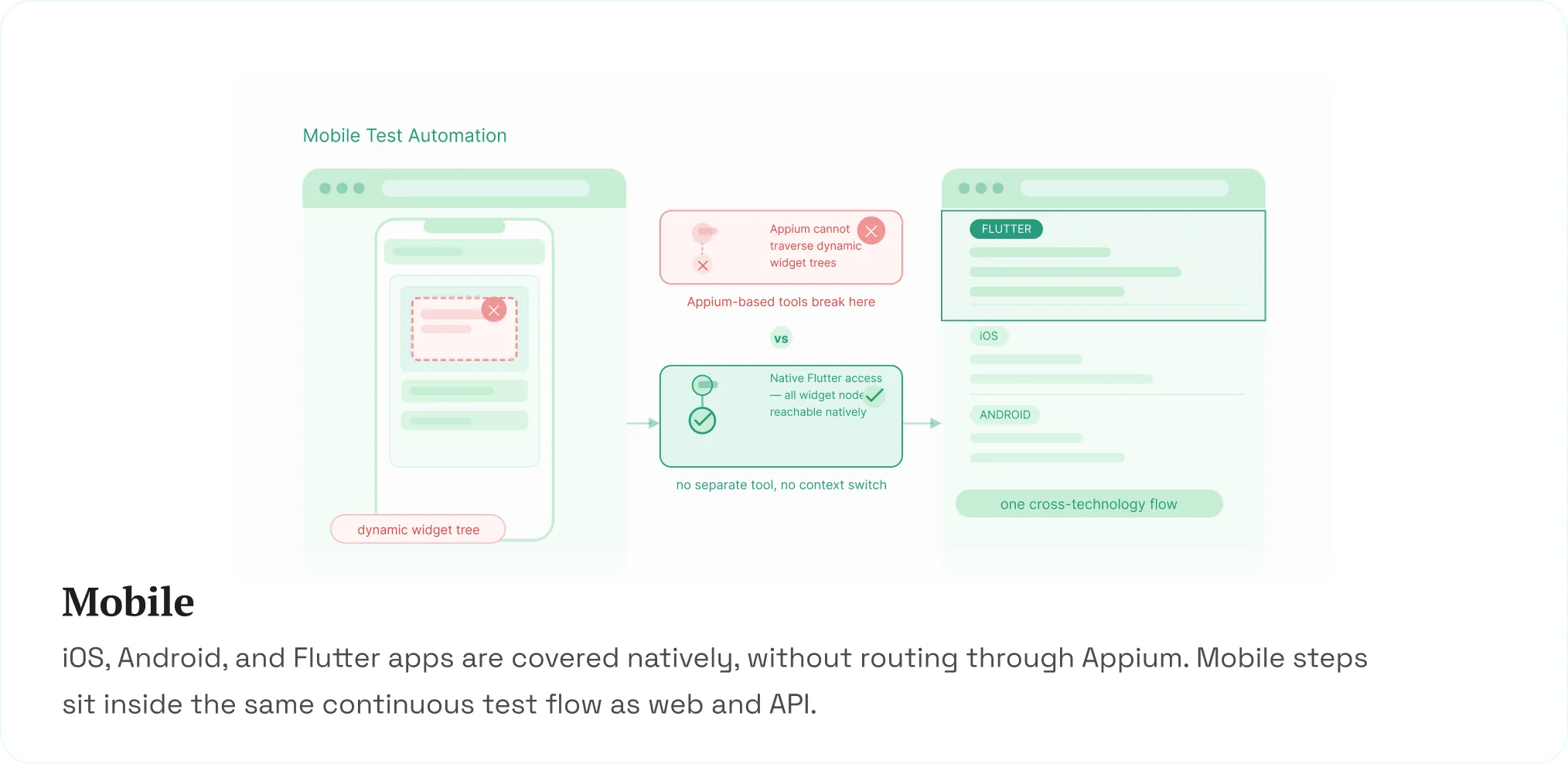
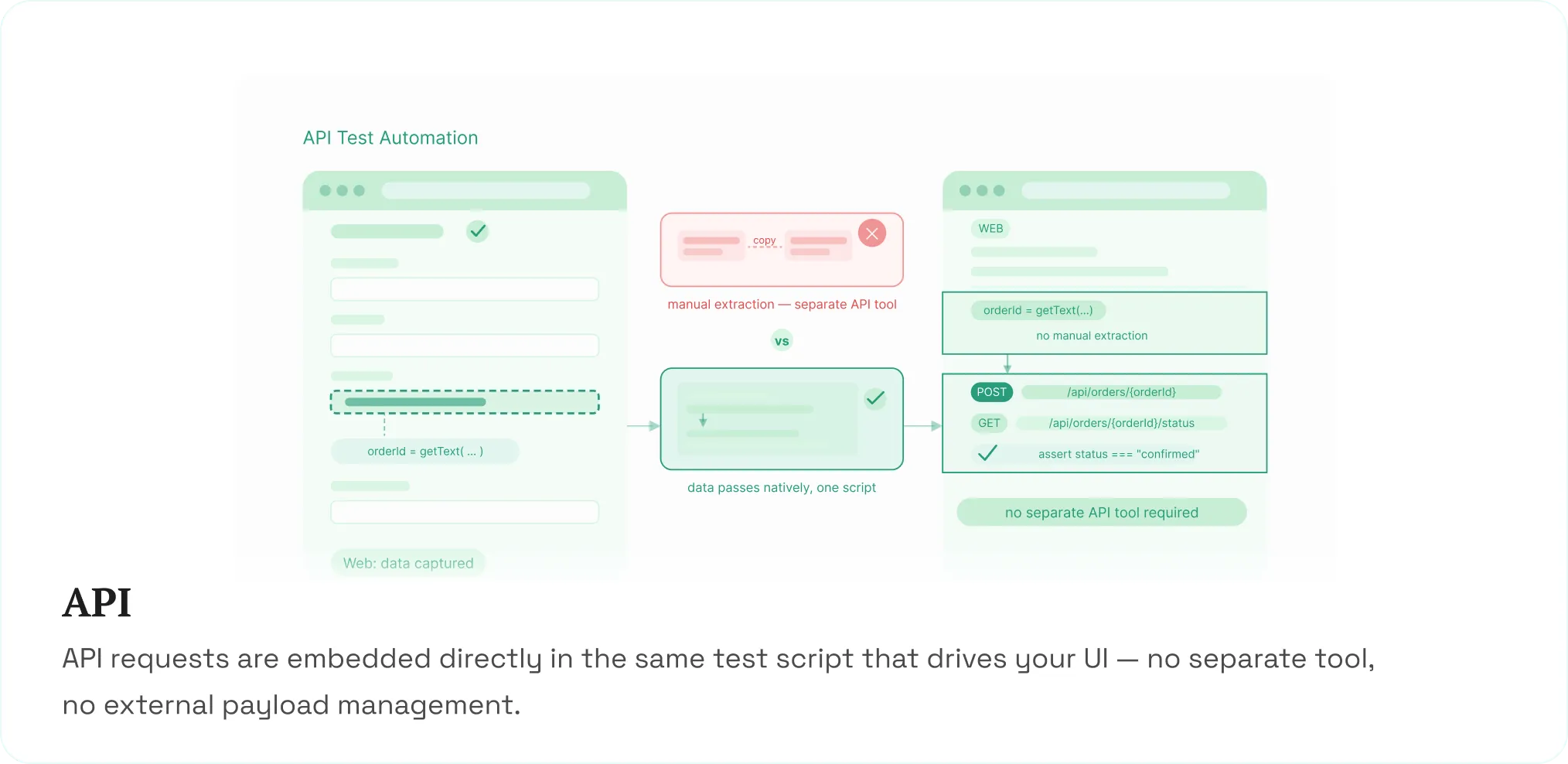
Selenium is scoped to web browsers only; Sahi Pro runs one continuous test across web, desktop, mobile, API, and SAP without switching tools.
1,000 enterprises chose Sahi Pro
400 found us through word-of-mouth alone.
9.0/10
Enterprise Customers
4.4/5
1,000+
Enterprise
Customers
I have used Sahi Pro at 2 different organizations now. Sahi support is wonderful and very helpful. This tool helps me to save time every day to find bugs faster across browsers during regression testing. It works out of the box across browsers. Much less coding and configuration than using Selenium. I rely on it each day as we release to production every day."
Mandi Papich
Manager, Testing, SmartEtailing
We are very old users of Sahi Pro and we are very happy to share that we have seen this tool get better day by day with new and robust features. The dedication of the support team and the amazing features of the tool definitely make it stand out in the crowd of several other competitive automation tools.
Linda Markhart
Principal QA Engineer, ChartWise
Frequently Asked Questions
How does Selenium's approach compare to Sahi Pro's AI capabilities?
Selenium has no native AI capabilities — it is a code-first framework, and AI features must be added through third-party libraries or custom tooling built by the team. Sahi Pro includes GenAIna for intelligent test generation, AI Assist for image-based element recognition, and Auto-healing to prevent false failures when the application changes between releases. For teams evaluating Selenium who want AI-assisted maintenance, the choice is between building that layer themselves on top of Selenium or adopting a product where it is built in and case-study verified.
Is Sahi Pro's no-code interface a replacement for Selenium's code-first approach?
Not a replacement — an extension. Sahi Pro provides a no-code visual interface for teams who want to enable non-developers to author and run tests, and a full scripting interface for engineers who need programmatic control. Teams that move from Selenium typically retain developer involvement for complex logic while manual testers take on day-to-day test authoring. The result is broader team participation in automation, not a narrower one.
Can Sahi Pro match Selenium's flexibility and control for developer teams?
Yes. Sahi Pro’s scripting interface gives developers full test logic control — custom loops, data manipulation, conditional flows, and API orchestration are all available. The difference is that Sahi Pro’s scripting operates on its own relational API engine, so scripts stay stable when the UI changes — a behaviour developer teams on Selenium frequently cite as a key reason for switching.
How does Selenium's community compare to Sahi Pro's market presence?
Selenium’s global community of millions is one of the largest in software engineering — the documentation, forums, Stack Overflow coverage, and ecosystem support are unmatched. Sahi Pro’s presence is narrower by design: 1,000 enterprises, with 400 arriving through unprompted referral. Community scale and enterprise reference depth are different assets. For teams evaluating community support as a requirement, Selenium’s ecosystem is larger; for teams that need documented enterprise case studies, Sahi Pro’s are available on request.
How do I calculate Selenium's real cost compared to Sahi Pro?
Selenium carries no licence fee, which makes it look cost-free at the start. The full cost appears in engineering time: the hours spent building the framework, maintaining tests after UI changes, managing browser driver updates, and rebuilding coverage after major releases. Teams that have calculated this consistently find that three engineers spending 60% of their time on Selenium maintenance represent a significant annual cost. Sahi Pro’s 80% maintenance reduction translates directly into recaptured hours — the licence pays for itself once that calculation is run honestly.
Does Selenium support enterprise on-premise deployment?
Selenium is self-hosted open-source software — it runs wherever teams choose to run it, which gives full infrastructure flexibility. Sahi Pro also supports on-premise deployment, with built-in reporting, centralised execution management, and data security controls that enterprise compliance teams typically require. For regulated industries where deployment model is a procurement requirement, both products support on-premise; the difference is in out-of-the-box governance, reporting, and the engineering overhead required to operate each at scale.
Try It in Your Environment
The clearest way to evaluate the maintenance difference is a POC against an application your team currently tests with Selenium. Build the same test scenario in Sahi Pro and observe what happens when the UI changes. The maintenance gap is visible in the first few weeks of production use, not just in benchmarks.