

















- Trusted by Mahindra Comviva and more
Regression Test Automation That Stay Working
Stable tests, distributed execution, and automatic logs on every run.
- Teams that rely on sahi pro


- Why regression test suites fail
Three Reasons Regression Test Suites Break Down at Scale
Tests That Break Every Time the Application Changes
Most regression automation is built on CSS selectors and XPath expressions tied to DOM positions. When developers refactor code – those locators break.
Suites That Run Too Slowly to Fit the Release Cycle
A regression suite that takes three days to execute sequentially is not a regression suite – it is a release delay mechanism.
Maintenance Overhead That Inverts the Teamโs Time
QA teams using conventional automation tools spend the majority of their time maintaining tests rather than writing new ones.
- Capabilities matched to regression testing
Three Capabilities That Make Regression Automation Work
Flowcharts turns every major automation pattern into a drag-and-drop interface. Conditional logic, data-driven testing, and suite dependencies without writing a single line of code.

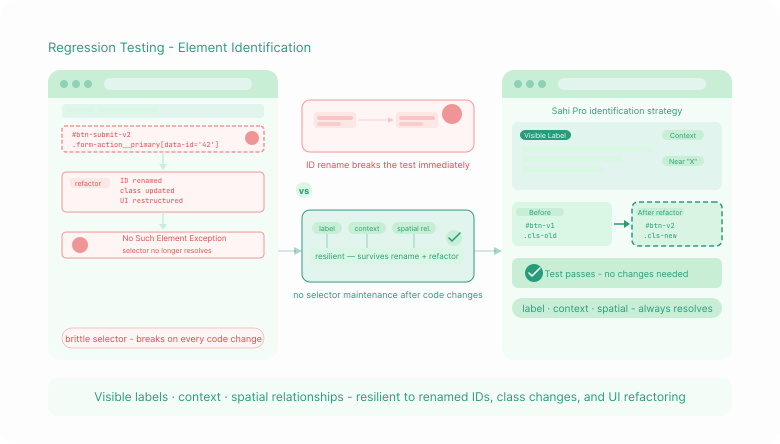
Element Identification That Survives Code Changes
Sahi Pro identifies elements using visible labels, context, and spatial relationships[cite: 1].

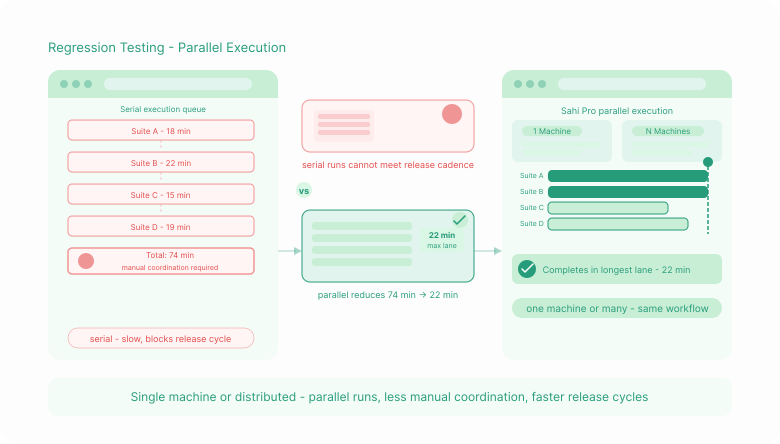
Parallel Execution That Fits Your Release Cycle
Execute large suites faster with less manual coordination[cite: 1].

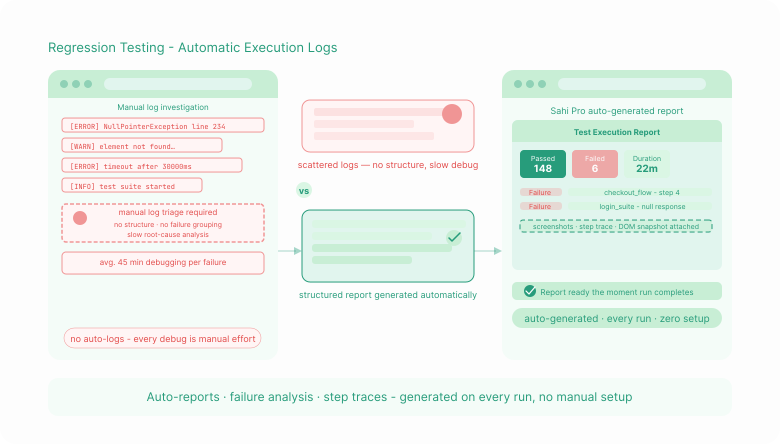
Automatic Execution Logs on Every Run
Detailed test reports and failure analysis generated automatically[cite: 1].
- Outcomes from production regression
What Regression Automation Looks Like With Sahi Pro
Mahindra Comviva automated thousands of test cases with Sahi Pro and reduced ongoing regression effort by 90%
Sahi Pro has been ideal solution for our web test automation needs with one tool addressing various web technologies. Its adoption is an exciting journey in which the test coverage is increasing constantly within Mahindra Comviva.
Mahesh VG,
Technical Manager, Mahindra Comviva
ITG reduced regression cycle time by 50%, cutting a 10-day manual process to 5 days with Sahi Pro.
Sahi Pro Automation tool has been built with the QA fraternity in mind and does not require advanced software programming skills. It is easy to use across multiple browsers and the support from the Sahi team is always prompt.
Basheer Shaik,
Head of QA, ITG
SmartEtailing uses Sahi Pro to run regression automation as part of its daily production release cycle.
I rely on it each day as we release to production every day. It works out of the box across browsers. Much less coding and configuration than using Selenium.
Mandi Papich
Manager Testing Automation QA, SmartEtailing
DirectPathโs Senior QA relies on automation that keeps pace with continuous product changes.
Support for refactoring and maintaining tests has been an amazing feature. As the products evolve so do the automation suites.
Monica Becerra,
Senior QA, DirectPath
ChartWise got regression tests running quickly with Sahi Pro, turning failure logs into clear signals of real product changes.
I wish I would have found this product sooner. I was able to get our products regression tests up and running very quickly. Post running the regression tests against every build, now a failure in the log is one that tells me that something has changed, a bug has been introduced. Sahi is a time saver.
Linda Markhart,
Principal QA Engineer, ChartWise
- Full scope of regression automation
Every Test Type Your Regression Suite Requires
Functional
regression
Verification that existing features behave correctly after every change
Cross-browser
regression
The same suite executed across Chrome, Firefox, Safari, and Edge
API
regression
Backend service validation after changes that affect integration points
Database
regression
Backend state verification after transactions and workflow changes
Mobile
regression
Native and hybrid application regression on iOS and Android
Desktop application
regression
Windows desktop and Java application regression testing
Integration
regression
End-to-end workflow validation across web, desktop, API, and database layers
Performance
regression
Replaying regression scenarios with concurrent virtual users
Visual
regression
Screenshot comparison integrated into regression runs
- For teams evaluating regression automation
From First Test to Full Suite: How the Product Works
1. Record or author individual test cases
Create test cases either through Sahi Proโs no-code recorder or directly in JavaScript, with both running on the same execution engine.
2. Organise tests into a regression suite
Group test cases into a suite, then add tags, dependencies, and data files through a simple UI action.
3. Configure parallel execution
Configure threads and machines, and let Sahi Pro distribute tests, respect dependencies, and combine results automatically.
4. Execute and review results
Execute suites from the UI or CI/CD command line and review live progress with root-cause-focused failure analysis.
5. Maintain tests at the sprint level
Update only changed elements and propagated those changes across all linked scripts through the Accessor Repository.
Questions Teams Ask Before Automating Their Regression Suite
How does automated testing work for insurance policy management systems?
Regression test automation uses software tools to automatically re-execute tests after application changes, verifying that existing functionality still works correctly. It replaces manual re-testing, which becomes impractical as applications grow and release cadences increase. A regression automation suite provides documented evidence that changes have not broken existing behaviour before every release.
How often should regression tests run?
Regression tests should run whenever the application changes in a way that could affect existing functionality. In practice, this means before every release – and in teams following continuous integration, it means on every commit to shared branches. Parallel execution makes frequent, complete regression runs practical by reducing total suite time significantly.
What is the difference between regression testing and retesting?
Retesting re-executes a specific test case that previously failed, after the reported defect has been fixed, to confirm the fix is effective. Regression testing re-executes the full relevant test suite after any application change, to verify that the fix has not introduced new defects elsewhere. Retesting is targeted and narrow. Regression testing is broad and runs regardless of whether a specific defect was previously found.
What makes a regression test suite fragile?
Regression tests become fragile when they rely on identifiers that change as the application is updated – DOM positions, dynamic element IDs, XPath expressions tied to page structure, or CSS class names that developers rename during refactoring. When any of those identifiers change, the tests fail – not because the application is wrong, but because the test was written against an unstable anchor. Sahi Pro identifies elements using proximity and context that remain stable across code changes.
How do you decide what to include in a regression suite?
The starting point is test cases that cover functionality your users depend on – workflows that, if broken, would produce a defect report or a support call. Functional tests for core business processes, integration tests for critical data flows, and tests for known high-risk change areas. Coverage expands over time as new functionality is automated.
How does regression testing work in agile development?
In agile, regression testing runs at the end of every sprint, before each release, and – in teams with CI/CD pipelines – on every code commit. The suite grows sprint by sprint as new functionality is automated. Parallel execution solves the speed challenge: Sahi Pro runs multiple test threads simultaneously, so a suite that would take hours sequentially completes faster as machine or thread count increases.
What is the best way to reduce regression test maintenance?
Choose an element identification approach that does not depend on identifiers developers change during normal development. Tools that identify elements by visible labels, proximity, and element type – the way a human tester would find them – require significantly less maintenance when application structure changes. Sahi Proโs relational API approach is why customers report tests running robustly across many major application versions without rebuilding the suite.
How do you integrate regression testing with a CI/CD pipeline?
Sahi Pro integrates with Jenkins, Azure DevOps, GitLab CI, GitHub Actions, TeamCity, and Bamboo. The suite runs from a command-line call that CI/CD tools trigger as a pipeline step. Results are returned in JUnit XML and TestNG formats, which CI tools read natively to display pass/fail status.
What is the difference between automated regression testing and continuous testing?
Automated regression testing runs a defined suite of existing test cases after application changes. Continuous testing integrates that automated execution directly into the development pipeline, so tests run automatically on every code commit without requiring a manual trigger. Teams new to automation typically start with triggered regression runs before releases. Teams with mature CI/CD pipelines integrate Sahi Pro into the pipeline so regression runs automatically on every build.
- Two ways to move forward
Try It Against Your Regression Suite, or Talk Through Your Requirements
Try It Yourself
Full product access across all modules and capabilities. Run Sahi Pro against your actual application - the one whose regression suite is currently giving you problems - before any conversation about purchasing.
- No sales call required
- No credit card required.
Talk to Our Team
Tell us about your current regression suite - test case count, application technologies, release frequency, and current maintenance overhead. We will come back with a specific assessment of where Sahi Pro addresses your problems and what deployment looks like in your environment.
- Thirty minutes
- No slides