



















Sahi Pro vs Tricentis Tosca

How Teams Decide

Deliver verified automation outcomes with Sahi Pro

Test across every technology, in one unbroken flow

The Sahi Pro Advantage Sahi Pro vs. Tricentis Tosca

AccelQ leads with analyst recognition and AI ambition. Sahi Pro leads with verified outcomes and an architecture you can test in a POC before you buy.

Dimension

Test authoring approach

Product coverage

Cross-technology single flow

AI capabilities

SAP support

Deployment

Onboarding

Who authors tests

Pricing model

Customer base

Community

Test authoring approach

Product coverage

Cross-technology single flow

AI capabilities

SAP support

Deployment

Onboarding

Who authors tests

Pricing model

Customer base

Community

From customers who evaluated both products

These are the reasons customers gave when they evaluated both products and made their decision.
Found it easier to maintain
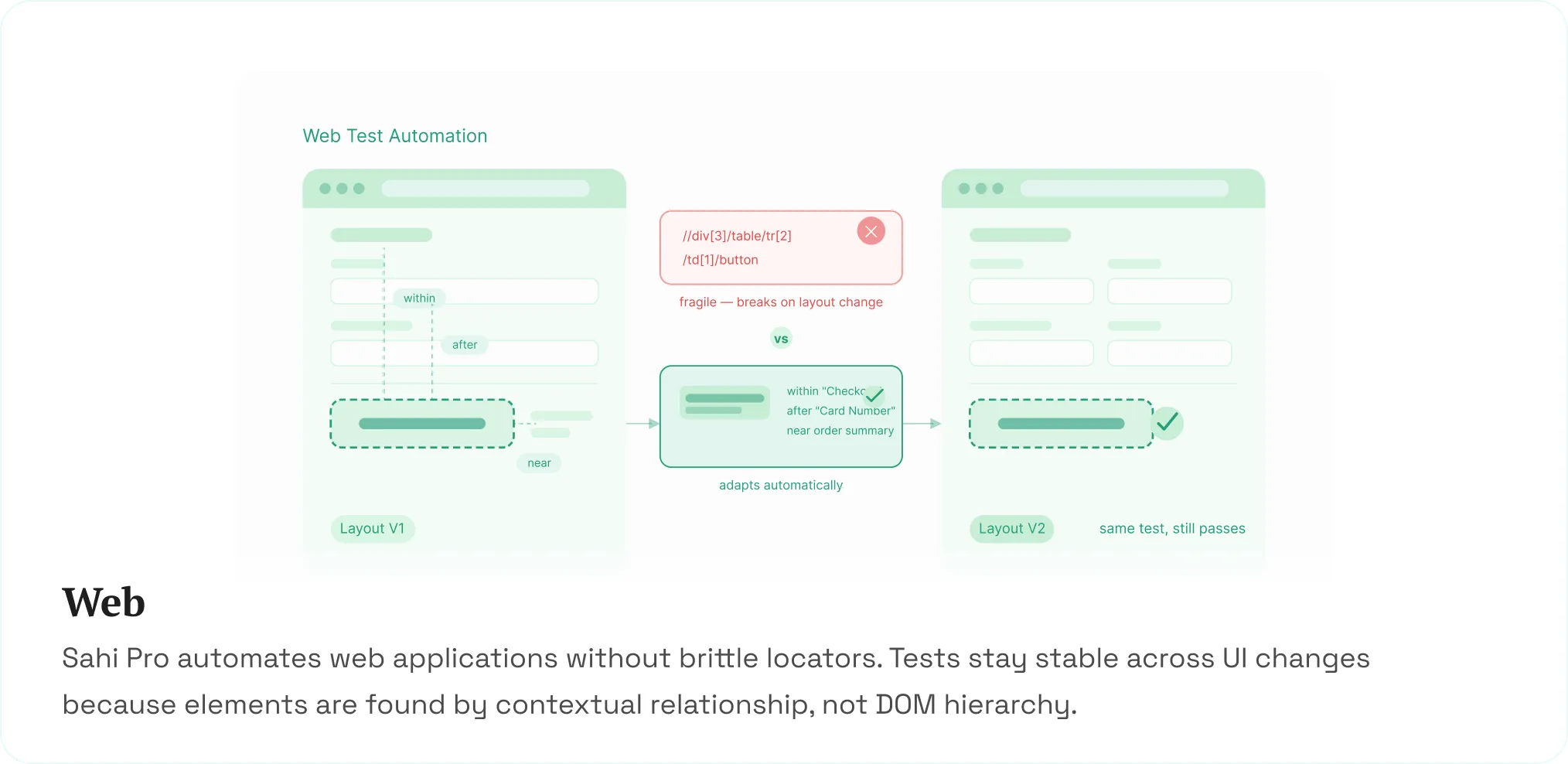
Tosca’s module library requires dedicated expertise at scale; Sahi Pro’s relational APIs adapt tests to UI changes automatically.
Tosca’s TCO includes certification and services overhead; Sahi Pro’s savings are documented in verified customer case studies.
Tosca’s authoring suits governed programmes; Sahi Pro adds scripting alongside no-code for complex logic, without a certified specialist.
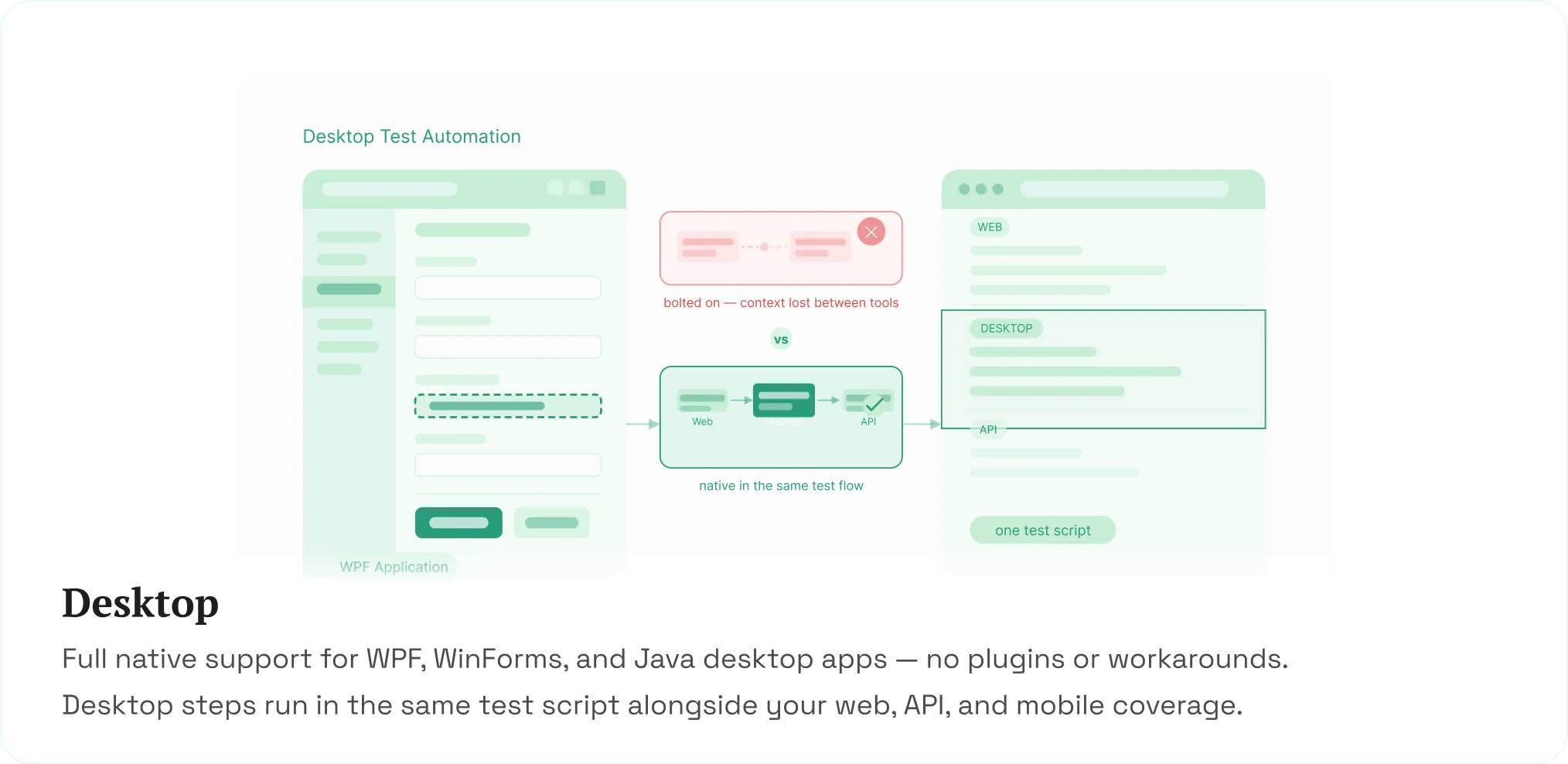
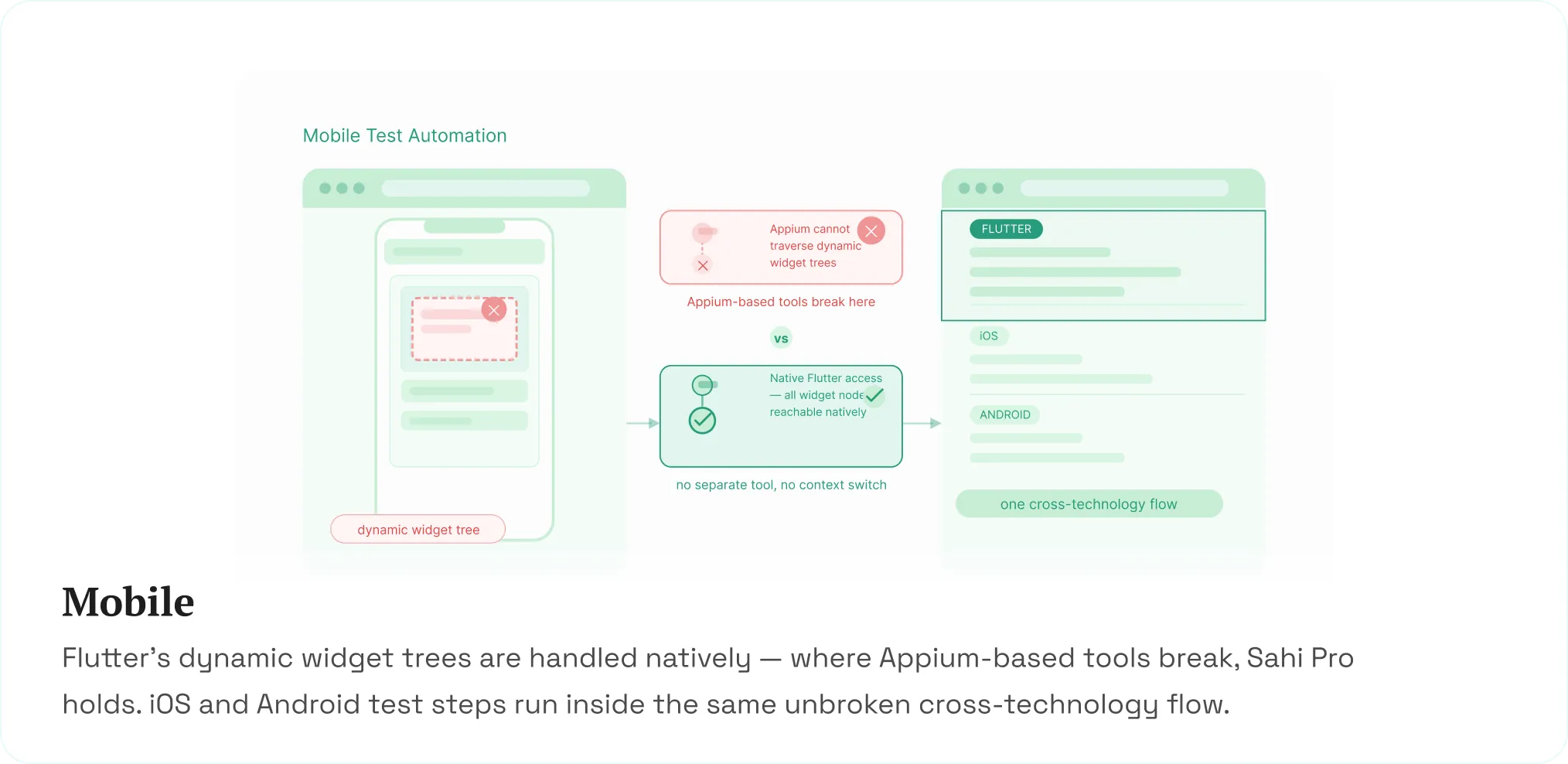
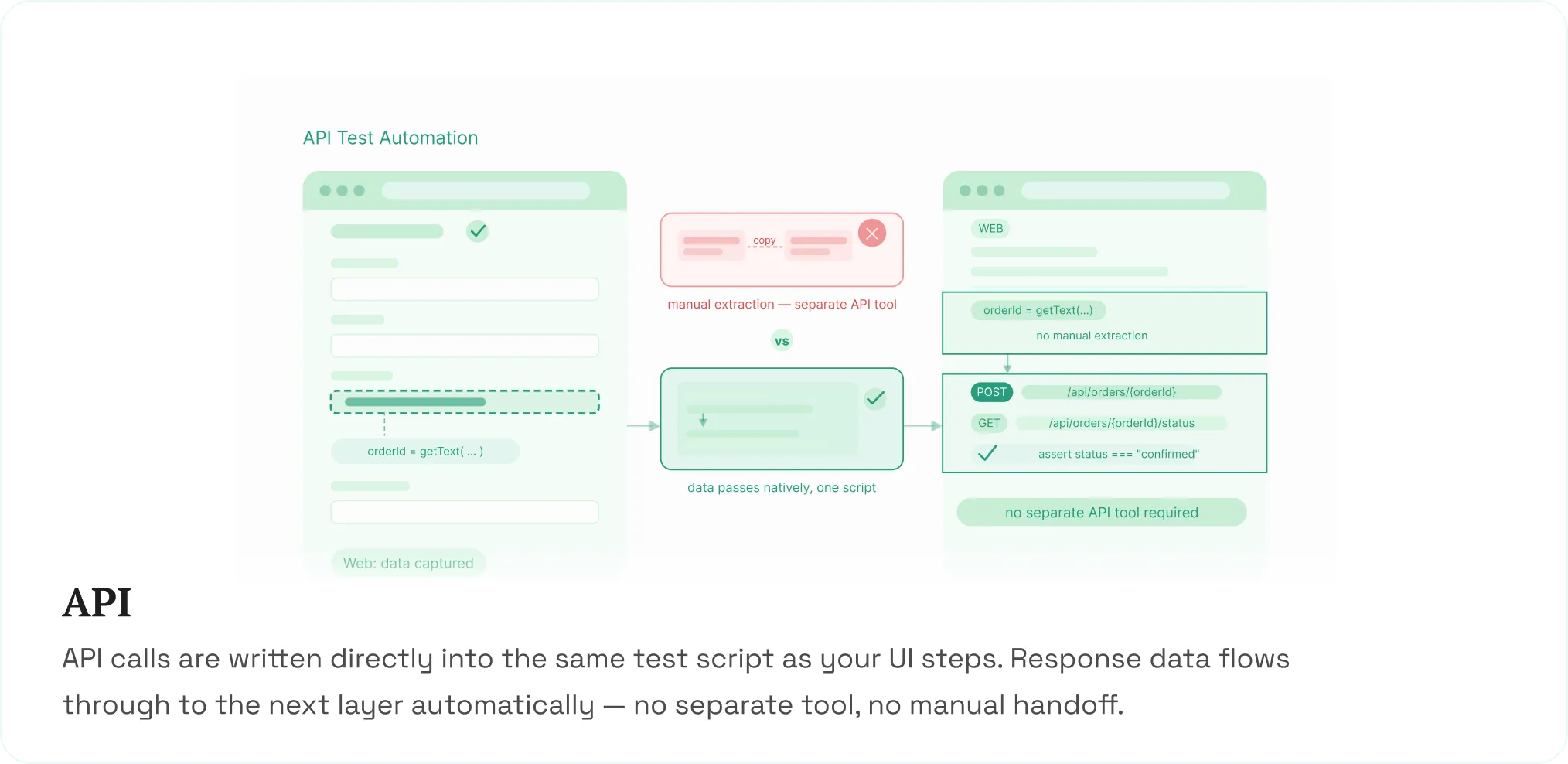
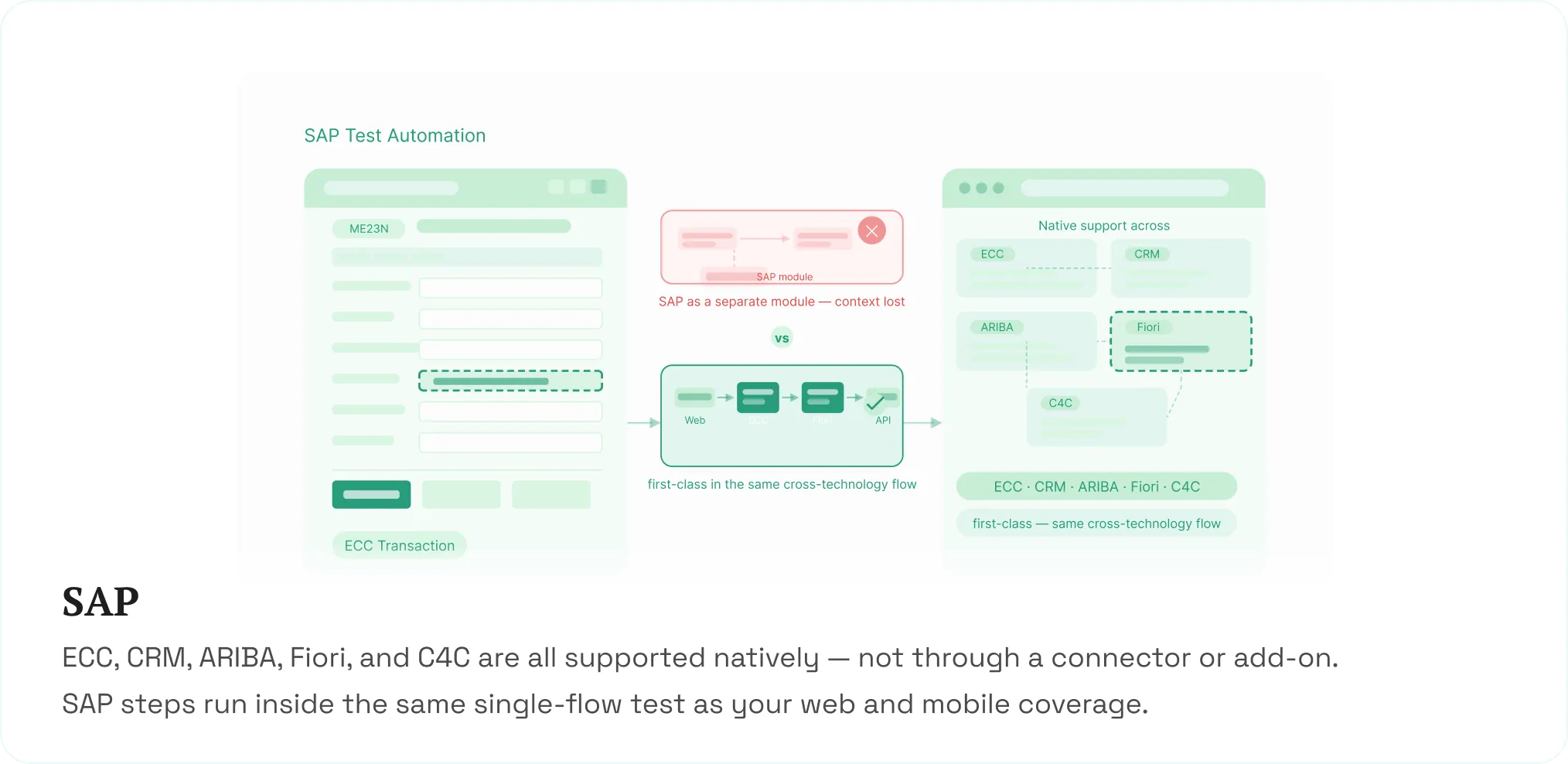
Tosca uses separate modules per technology; Sahi Pro runs one test across web, API, desktop, and mobile.

400 found us through word-of-mouth alone.

9.0/10

Enterprise Customers

4.4/5

1,000+

Enterprise Customers

Frequently Asked Questions

How does Katalon's AI compare to Sahi Pro's AI capabilities?
Katalon’s AI offering centres on TrueTest AI — a GPT-powered capability for intelligent test generation — and TestOps AI for analytics and maintenance insights. Sahi Pro’s AI layer includes GenAIna for test generation, AI Assist for image-based object detection, and Auto-healing to reduce false failures triggered by minor UI changes. Both products treat AI as a practical maintenance tool rather than a core architectural claim. The meaningful question is not which product names more AI features, but which one can show you documented outcomes from customers who used those features in production.
No. Tosca’s model-based methodology organises tests into Technical Components and reusable modules, which makes large programmes more governable — but each technology is handled through separate modules. Sahi Pro’s cross-technology single-flow architecture means one test script moves from web to API to desktop to mobile without breaking, switching tools, or manually passing data — with shared state throughout. The clearest way to evaluate this distinction is a direct POC: request a single test that crosses technologies continuously in each product and see which one holds together.
Yes. Sahi Pro’s no-code interface requires no programming background — QA team members build, run, and maintain tests through the visual interface without writing code. Teams are productive within two weeks, with no certification required. Tosca’s model-based authoring is powerful and well-governed, but typically requires 6–8 weeks of training and certified engineers to operate effectively at scale. The no-code accessibility is genuine in both products; the difference is in how much specialisation is needed to sustain it.
Tosca holds the Gartner Magic Quadrant Leader position for AI-Augmented Software Testing Tools (2025) and Forrester highest execution recognition — the strongest analyst standing in the category. Sahi Pro is not currently listed in the Gartner Magic Quadrant; its focus has been on product quality and customer outcomes rather than analyst relations. Sahi Pro’s customer base of 1,000 enterprises — with 400 arriving through unprompted word-of-mouth — reflects a different kind of market validation. Gartner recognition reflects analyst programme investment; word-of-mouth reflects customer satisfaction without marketing incentive. For teams where Gartner listing is a procurement requirement, this is a relevant consideration.
Tosca’s published productivity and ROI figures are vendor-reported. Sahi Pro’s figures — 90% savings on regression man-hours, 80% maintenance reduction — are sourced from documented customer case studies that are available on request. For any ROI claim from any vendor, the right question is: can you show me the source? Sahi Pro can. Ask both vendors for the underlying case study data before building a business case on either set of numbers — and request a side-by-side TCO analysis that includes licence fees, implementation services, certification costs, and ongoing engineering overhead.
Yes — Tosca supports both cloud and on-premise deployment. Sahi Pro also offers both, with full data security control and no dependency on cloud infrastructure — a common requirement for regulated industries including financial services, healthcare, and manufacturing where data residency, audit trails, and compliance controls are non-negotiable. For teams in regulated environments evaluating both products, on-premise capability is comparable; the difference is in total cost and the specialist knowledge required to deploy and manage each product.

Try It in Your Environment

The most direct way to evaluate the cross-technology single-flow difference is a POC with your own applications. Request a test that starts on web, passes through an API, and continues on mobile – in one unbroken flow. Most teams find the answer is clear within the first session.